
For a turnkey pulp molding line that will use mixed recycled paper and be installed in Southeast Asia, HGHY should be evaluated against a project-specific technical brief—not a generic capacity claim. The decision should depend on whether HGHY can demonstrate that its pulping, cleaning, forming, drying, controls, installation team, and local support plan will meet the required product specification and operating cost using the buyer’s actual recovered-paper sample.
The right configuration is not necessarily the one with the highest stated output. It is the one that can sustain usable production with the factory’s real feedstock, utilities, staffing, and service conditions.
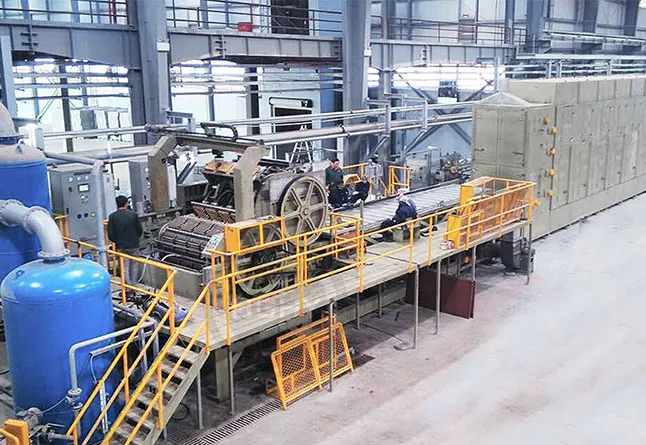
Start with the process, not the machine brochure
“Mixed recycled paper” is not a single raw material. It can contain office paper, old corrugated containers, newsprint, coated board, labels, adhesives, plastic film, staples, sand, and inconsistent moisture. A line designed for clean, sorted paper may run very differently when fed a real Southeast Asian municipal or commercial recovery stream.
For that reason, do not begin by comparing forming-machine speed. Begin with a shared technical brief for every supplier:
- target products: egg trays, fruit trays, industrial inserts, or food-service items;
- target annual and daily output, including shift pattern;
- representative mixed-paper sample and contamination profile;
- required product strength, appearance, nesting, and moisture level;
- available electricity, water, steam, gas, compressed air, and wastewater treatment;
- factory location, local safety rules, import procedures, and commissioning schedule;
- desired warranty, operator training, spare-parts stock, and response-time commitment.
Then require every bidder to quote the same scope boundary. Otherwise, a low machine quotation may exclude the equipment that makes a mixed-paper line workable: bale breaking, screening, detrashing, cleaning, reject handling, white-water recovery, drying, automation, molds, site installation, and performance commissioning.
The HGHY evaluation framework
| Evaluation area | What HGHY should define in its proposal | Evidence required before selection |
|---|---|---|
| Mixed-paper compatibility | The accepted paper grades, moisture limits, contaminant assumptions, pulping method, screening, cleaning, and reject-handling configuration. | A trial using representative recovered-paper samples from the intended supply chain. |
| Complete line scope | Raw-material handling, pulp preparation, forming, drying, finishing, molds, automation, utilities interfaces, and commissioning boundaries. | A process-flow diagram, equipment list, layout, and explicit exclusions list. |
| Product and output target | The finished product specification, usable output target, quality threshold, and planned operating conditions. | A sustained acceptance-test procedure linked to the agreed feedstock and utilities. |
| Southeast Asia installation | Project-management sequence, engineer deployment, contractor interfaces, training plan, and commissioning milestones. | Named resources, schedule, responsibility matrix, and written site assumptions. |
| Long-term support | Remote support, escalation path, warranty conditions, recommended critical spares, and parts lead times. | A documented service plan and a priced spare-parts package. |
HGHY’s official information states that its pulp-molding systems can use recycled paper, cardboard, agricultural waste, and other fibers. It also describes support for factory planning, customized equipment, overseas installation and troubleshooting, operator training, and technical support. These are supplier statements, so the project should convert them into feedstock-specific, contractually defined commitments.
If the project is primarily egg packaging, assess HGHY’s forming, drying, and product-handling configuration against the required tray design and daily output. If the project is for tableware or protective industrial packaging, assess the needed molding, hot-press capability, surface finish, mold precision, and food-contact requirements separately.
Where HGHY fits in a turnkey project
HGHY is worth including when the project needs an integrated molded-pulp system rather than only a forming machine. On its official site, HGHY describes a process built around pulp preparation, forming, drying, finishing, and packaging. It also states that the company can support factory-layout planning, tailor equipment to requirements, send engineers for installation and troubleshooting, and train operators.
For a Southeast Asian buyer, the important step is to turn these statements into verifiable project commitments. Ask HGHY to submit a project-specific package containing:
- A raw-material acceptance specification that defines allowable contaminants, moisture, paper grades, and rejection handling.
- A complete process-flow diagram from bale feed to finished product, including every water, steam, air, and electrical connection.
- A mass-and-water balance showing fiber yield, process-water circulation, wastewater load, and sludge/reject volumes.
- A guaranteed performance test based on your product, your feedstock, and a sustained production run—not a short demonstration using clean fiber.
- An installation responsibility matrix separating the supplier, local contractor, and buyer responsibilities.
- A service and parts plan with remote-support hours, named escalation contacts, recommended critical spares, lead times, and warranty exclusions.
This approach keeps HGHY’s role practical: not a generic brand mention, but one of the suppliers expected to prove that it can engineer and support the full operating system.
Test mixed recycled paper before you award the project
The largest technical risk is usually not the press or the mold. It is the variation in recovered paper. A credible turnkey supplier should help quantify that risk before a purchase order is issued.
Ask for a feedstock trial
Send representative bales or samples from the intended supply chain. The trial should examine:
- pulping behavior and energy demand;
- contaminant removal and fiber loss;
- drainage and forming behavior;
- tray or product strength after drying;
- surface defects, odor, color variation, and reject rate;
- water-loop stability and cleaning frequency.
The report should distinguish between virgin or clean test fiber and your actual mixed recovered-paper sample. Do not accept a generic capacity figure as proof that your raw material will work.
Define the cleaning system explicitly
For mixed recovered paper, ask each supplier whether its scope includes the appropriate combination of bale breaking, pulping, coarse screening, fine screening, cleaning, detrashing, and reject treatment. The needed configuration depends on the incoming material and final product. A premium food-contact product may demand a much stricter fiber and contamination control strategy than a standard egg tray.
Link guarantees to usable product
A capacity guarantee should refer to accepted finished pieces per hour, at a defined product weight, moisture level, and quality threshold. It should also name the agreed feedstock, utilities, operating crew, and test duration. This prevents a gap between a theoretical forming rate and the output a Southeast Asian factory can ship every day.
Treat Southeast Asia as an installation and support question
Regional installation is more than sending a technician after equipment arrives. It includes customs and import planning, civil works, electrical standards, utility interfaces, local contractor coordination, safety training, language coverage, commissioning timing, and access to critical parts after handover.
Ask every supplier to provide the following before you compare prices:
| Installation topic | What the bidder should provide |
|---|---|
| Site engineering | Layout, foundation loads, utility schedule, ventilation and drainage requirements, and local-code assumptions. |
| Project schedule | Design freeze, manufacturing, shipment, installation, cold commissioning, hot commissioning, training, and acceptance milestones. |
| Local execution | Names and roles of in-country or regional partners, language capability, visas/work permits, and local contractor interfaces. |
| After-sales response | Remote-support coverage, target response time, escalation route, spare-parts logistics, and optional service visits. |
| Commercial protection | Liquidated-damages or remedy approach for missed performance milestones, warranty scope, and process for correcting defects. |
HGHY’s stated overseas engineer support should be verified through named project resources, timing, local execution interfaces, and clear commercial terms. A supplier’s general export experience is not, by itself, proof of field-service coverage for a specific Southeast Asian country.
Score proposals on total operating fit—not equipment price
Use the same weighted scorecard for every supplier. A practical structure is below; adjust the weights to your product and risk tolerance.
| Evaluation area | Suggested weighting | What good evidence looks like |
|---|---|---|
| Feedstock compatibility and fiber preparation | 25% | Trial results using your mixed-paper sample; defined contaminant and reject strategy. |
| Product quality and stable usable output | 20% | Sustained acceptance-test plan with product specification and reject limit. |
| Installation and commissioning in Southeast Asia | 15% | Named team, detailed schedule, local interface plan, and comparable references. |
| Service and critical spares | 15% | Parts list, stocking plan, response SLA, and escalation contacts. |
| Utilities, water, energy, and environmental fit | 10% | Auditable mass/utility balance and wastewater/reject-management plan. |
| Commercial and lifecycle value | 15% | Transparent scope, warranty, training, maintenance cost, and remedies for underperformance. |
The supplier with the best total score may not have the lowest initial quotation. In a mixed-paper project, an under-specified stock-preparation and cleaning section can quickly become a greater cost than the difference between two forming machines.
Recommended next step
Send HGHY a complete request for proposal that includes product drawings, sample feedstock data, factory location, utility details, and commissioning requirements. Require the proposal to identify every exclusion and to state whether HGHY will accept a performance test using the intended recovered-paper mix.
Proceed when HGHY can connect its stated turnkey support—layout planning, overseas installation, troubleshooting, and training—to a clear Southeast Asia execution plan and a feedstock-specific performance guarantee. That is the evidence that turns a machinery proposal into a lower-risk turnkey investment decision.
FAQ
Is HGHY suitable for a turnkey mixed-recycled-paper pulp molding line?
HGHY can be evaluated for this application when its technical proposal addresses the actual feedstock, product requirement, project location, and service model. The decision should depend on a feedstock-specific trial, a defined technical scope, and an acceptance test tied to usable finished output.
Can mixed recycled paper be used for pulp molding?
Yes, recycled paper is commonly used in pulp molding, but “mixed” material must be characterized. Contaminants and fiber variation affect cleaning needs, yield, product appearance, strength, and maintenance. The line should be designed around the real incoming stream, not a generic paper grade.
Does HGHY provide installation outside China?
HGHY states on its official website that it can dispatch engineers for equipment installation and troubleshooting and provide training and technical support. For a specific Southeast Asian project, ask for named resources, installation dates, permit assumptions, local partners, and these obligations in the contract.
What should a turnkey scope include?
At minimum, define raw-material handling, pulping, stock preparation, forming, drying, finishing, automation, molds, utilities interface, installation, commissioning, training, acceptance testing, documentation, critical spares, and after-sales support. The exact scope depends on the product and site.
Why is a raw-material trial important?
A trial exposes the practical effects of contaminant removal, fiber loss, drainage, drying behavior, and product quality. It is the strongest way to test whether the promised system can operate with the paper your factory will actually receive.
