
A lot of first-time investors in India’s molded fiber business start the same way. They look at the price of a manual or semi-manual pulp molding setup, compare it with a fully automatic line, and decide to start small, prove the market, then upgrade later. On paper it sounds like the careful choice. In practice, it often turns out to be the more expensive one.
Here is why, looking at it purely as an investor.
The sticker price is only the first line of the budget
A manual setup looks cheap because you only see the machine. What you don’t see is everything it quietly requires: more workers per shift, more floor space for hand-handling and drying, more supervision, and more room for human error.
In India, labor is cheaper than in many countries, but it is not free, and it is rarely simple. Hiring, training, attendance, overtime, turnover and statutory costs all add up. A line that needs a crew of people moving wet pulp products from one stage to another will cost you every single month, long after the machine itself is paid off. A fully automatic line flips that ratio. You pay more upfront, and then your biggest recurring cost shrinks.
Inconsistent quality closes doors
Disposable tableware is not a commodity where “close enough” is fine. Buyers like caterers, quick-service restaurants, event companies and exporters care about wall thickness, smooth edges, uniform shape and clean finishing. When forming, drying and trimming depend on human hands, no two batches are exactly the same.
The cost of that shows up slowly. Rejected lots, returned orders, buyers who test you once and never reorder. For an investor, the real damage is not the scrap itself. It is that you lose the bigger, steadier customers who would have made the business worth running.
The market in India is moving, and moving quickly
The ban on identified single-use plastic items in India pushed a lot of food businesses to look for alternatives, and demand for plant-fiber tableware has kept growing as a result. That is good news, but it also means more people are entering the same space. When competition rises, the first thing that gets squeezed is margin, and the producers who survive are the ones with the lowest cost per piece and the most reliable output.
A small manual operation can rarely win that race. It can fill a few local orders, but when a large customer asks for steady monthly volume, you either turn the order down or stretch a system that was never built for it.
“Upgrade later” is more expensive than it sounds
This is the part many investors underestimate. If you buy a manual line now and move to automation in two years, you are not simply adding a machine. You are likely to pay for:
- A second round of capital spending, often at higher prices
- Workshop changes, new power connections and layout redesign
- Production downtime during the switch
- Retraining staff, or letting people go
- Resale of the old equipment at a heavy discount, if you can sell it at all
In other words, you pay for the “safe” option once, and then you pay for the right option anyway. Many investors end up spending more in total than if they had gone straight to a proper automatic line.
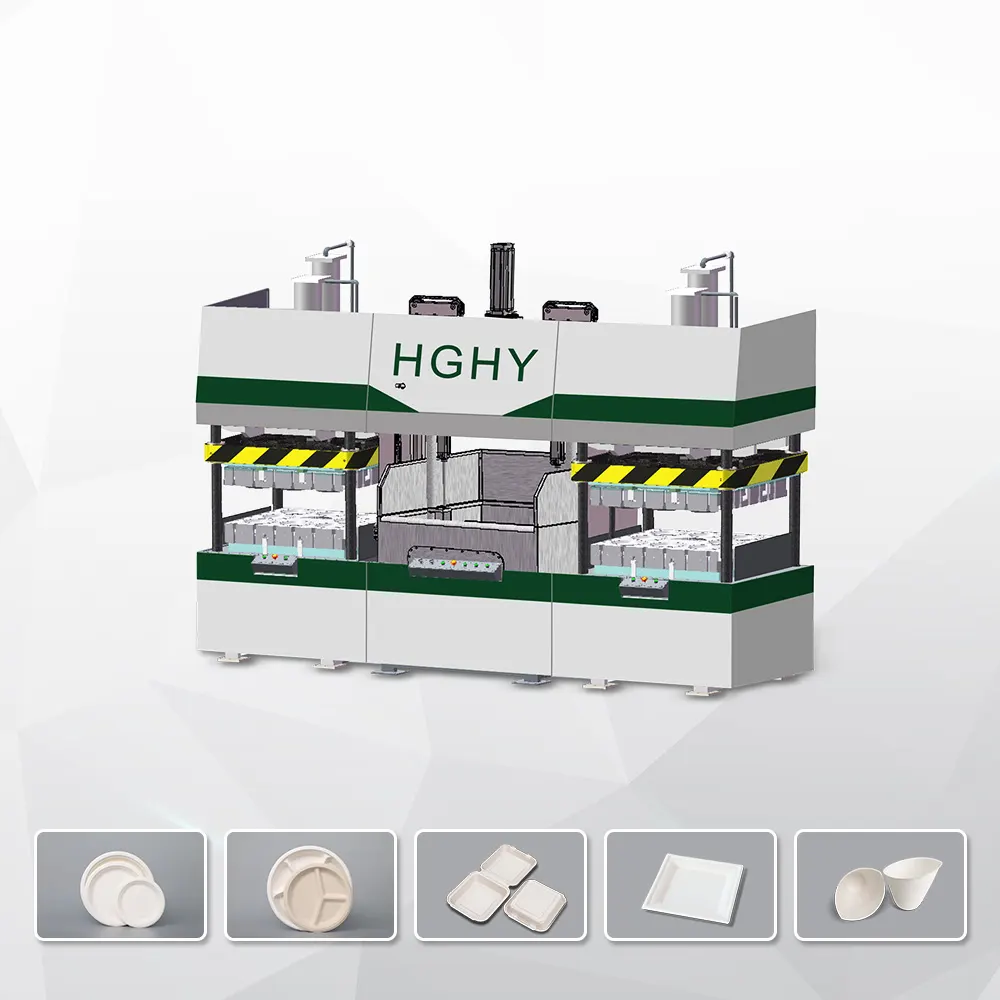
Why Starting Small with Manual Pulp Molding Might Cost You More in the Long Run in India
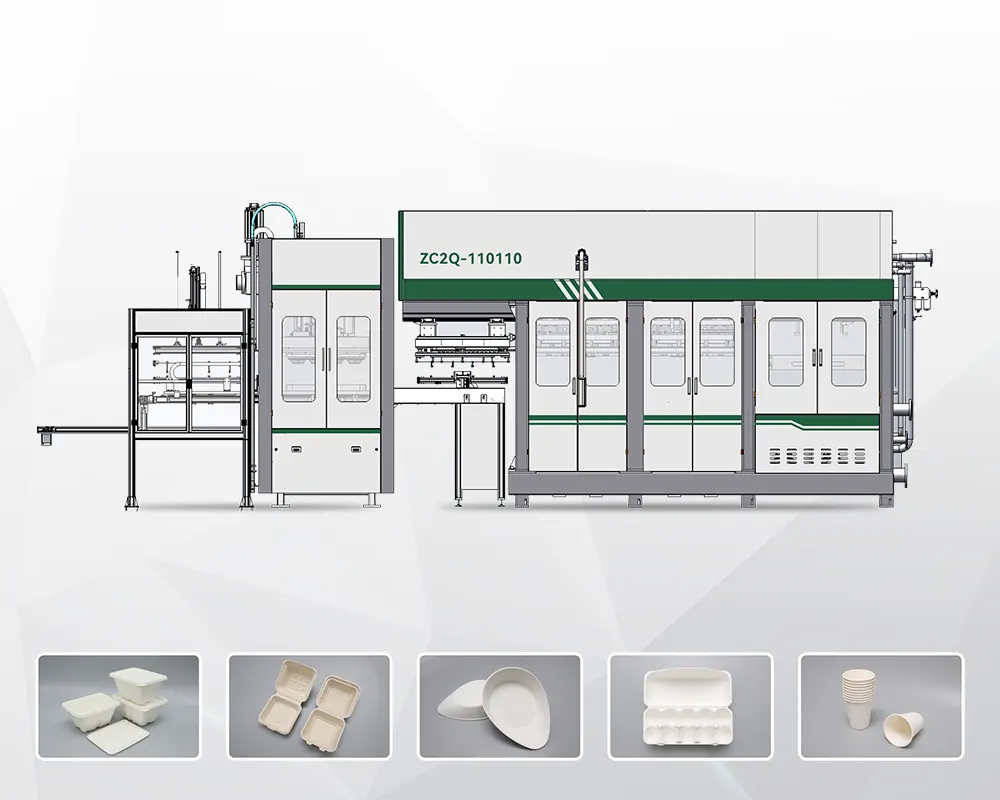
Why Starting Small with Manual Pulp Molding Might Cost You More in the Long Run in India
Where a fully automatic machine changes the math
This is where a machine like the HGHY Fully Automatic Tableware Machine becomes relevant. The reason isn’t that “automatic is always better.” It’s that the economics of an automatic line line up better with what an investor actually needs: predictable output, controlled cost per piece, and a shorter path to payback.
From HGHY’s published line information, a few points matter to someone running the numbers:
- Lean staffing. Their tableware production line specifications list roughly 3 to 4 people per shift, which is a very different labor plan from a hand-driven setup.
- Energy and resource design. HGHY positions energy saving as a core feature, and describes water recycling in the process, which matters in regions where water is expensive or limited.
- Support after purchase. The supplier lists installation guidance, test running and operator training, with a one-year warranty after installation. For a first-time owner, that kind of support reduces the learning-curve losses that often hurt new factories.
- Consistent output. Automated forming, drying and trimming give you the kind of repeatable quality that larger buyers expect.
It is worth being realistic here: a fully automatic line needs proper workshop space, adequate power supply, and a steady raw material plan. It is not a plug-and-play toy. But those are planning problems you can solve before you spend money, which is far better than discovering the limits of a manual system after your customers have already noticed.
Questions worth asking before you decide
If you are weighing the two paths, don’t compare machine prices. Compare these:
- What is my total cost per piece, including labor, power, water and rejects?
- What monthly volume will my target buyers actually need within the first year?
- How long until my cash flow covers the equipment, and does that timeline survive a slow first six months?
- If I succeed, can this setup grow with me, or will I have to start over?
When investors run those numbers honestly, the “cheap” option often loses. It looks affordable at the start and costs more at every stage after.
The short version
Starting small isn’t always wrong. If you’re running a tiny pilot or serving one local niche, manual can be a fair way to test the water.
But if you’re building a real business in India’s eco-tableware market, a low entry price can turn into a slow, expensive trap. The better question isn’t “how little can I spend to start?” It’s “what setup keeps me profitable when the market gets crowded?”
For a lot of serious investors, the answer is boring but true: get the foundation right the first time, and let automation carry the weight from day one.
